 Puzzle Fern
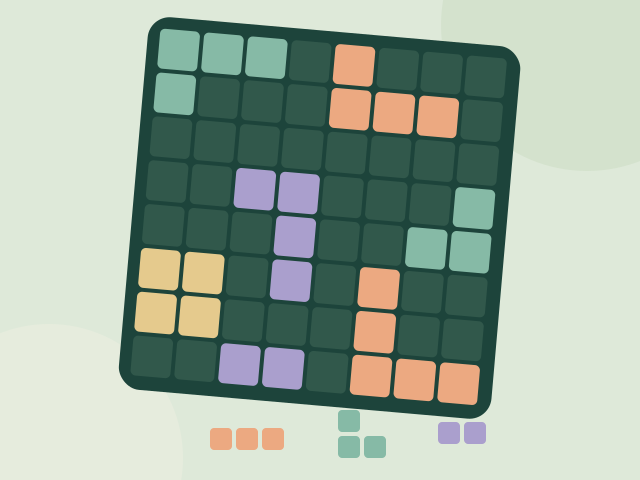
Block puzzles
Block Puzzle
Place blocks on an 8×8 board, clear complete rows and columns, and build your score. There’s no timer—take a moment to plan all three pieces.
A LITTLE FOCUS. A LOT OF PLAY.
Find a puzzle that fits your mood. Explore free logic, number and picture games, or start with Block Puzzle: place shapes on an 8×8 board and clear complete rows and columns. Choose a game below to play in your browser, with no download needed.
Block Puzzle ↗Small pieces.PICK UP & PLAY
Place blocks on an 8×8 board, clear complete rows and columns, and build your score. There’s no timer—take a moment to plan all three pieces.
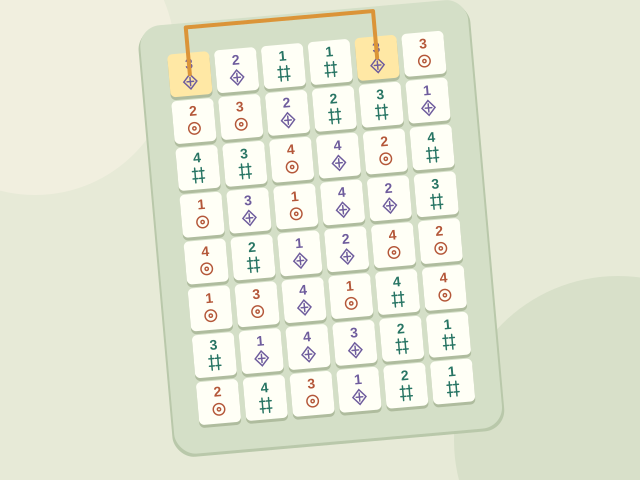
Find matching tiles and trace a clear path between them. Two turns are all you get; every pair opens a little more room.
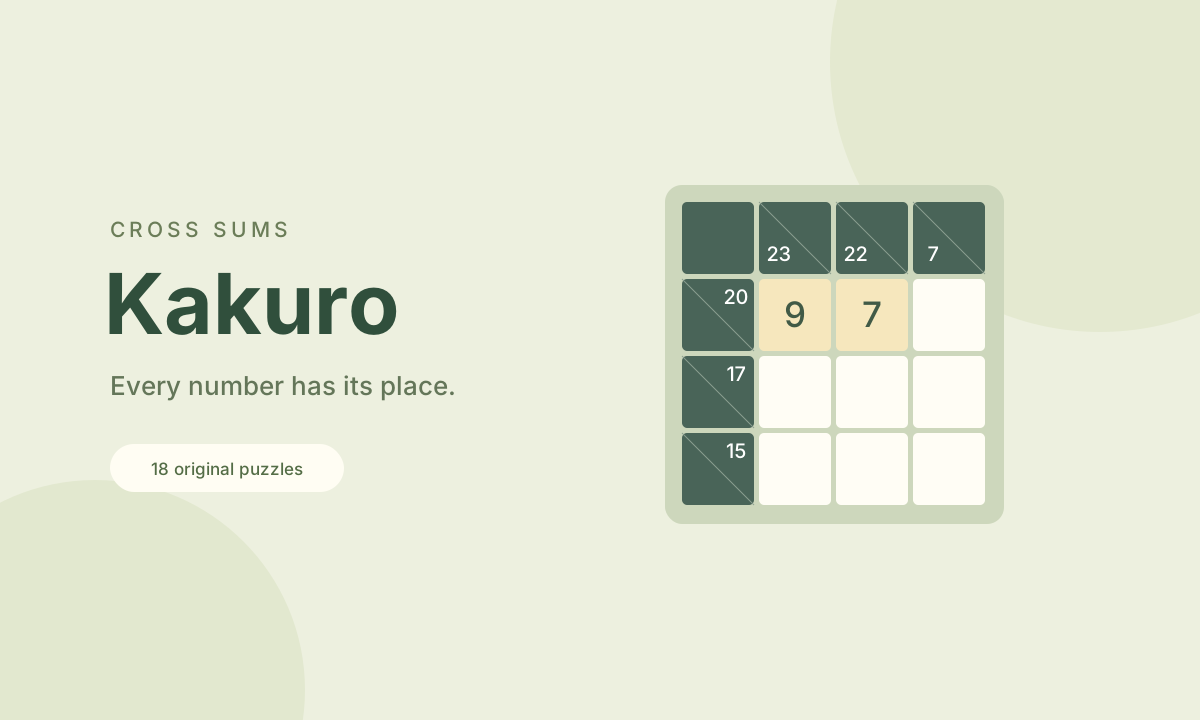
A crossword with numbers. Fill each run to match its sum, without repeating a digit. Keep notes as the possibilities narrow.
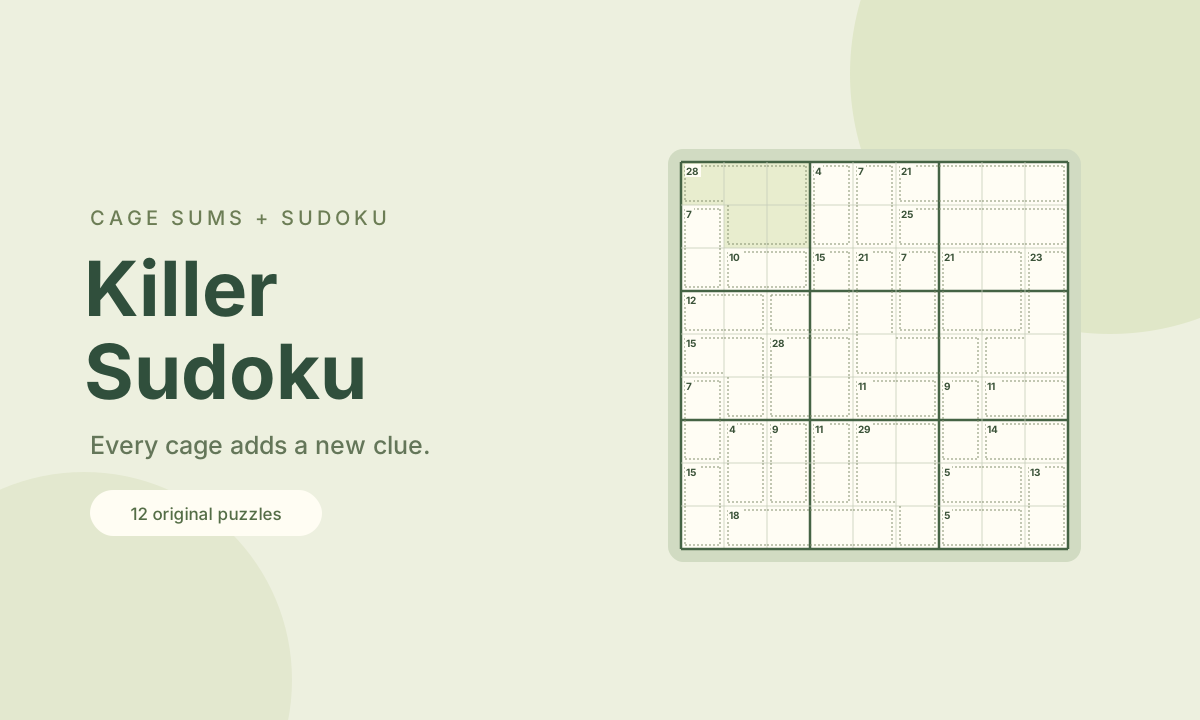
Nine digits, little cages, one satisfying solution. Use the sums and Sudoku rules to find where every number belongs.
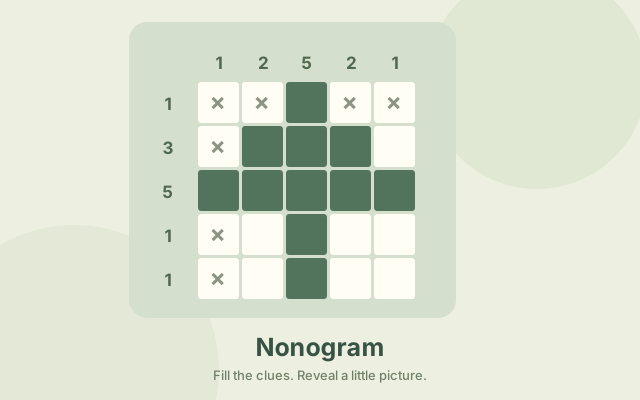
A little picture is hiding in the grid. Follow the number clues, fill the squares, and watch it take shape.
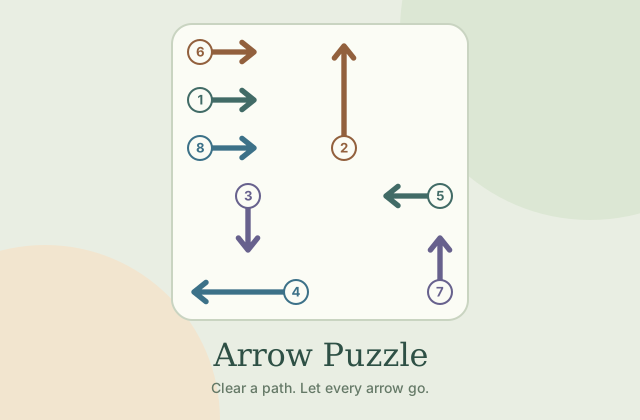
Give each arrow a clear way out. Remove the ones with space ahead, unblock their neighbors, and leave an empty board.
Start with the part of a puzzle that appeals to you: arranging shapes, following clues or spotting connections. The featured cards are a starting point; the all games directory lets you search the full collection and filter by category. Each game opens on its own page with its board, rules and controls.
Nonogram turns a blank grid into a picture through clues. Study the lengths of filled runs in each row and column to decide which squares to mark.
For number-based play, explore Kakuro or Killer Sudoku. Both ask you to think about sums alongside placement restrictions, although their layouts and rules differ. Futoshiki adds greater-than and less-than clues, Suguru uses small regions and neighboring cells, and Skyscrapers asks which numbered towers would be visible from an edge.
Hashi, also called Bridges, asks you to connect numbered islands into one network without crossing bridges. Mahjong Connect makes matching tiles and the open paths between them central to your choices.
If you prefer a small set of symbols, try Binairo: balance the two cell colors while avoiding three alike in a row and duplicate lines. In Lights Out, each press changes nearby lights, so one move can help in one area and change another.
For a different style of play, explore sorting colors in Water Sort, combining matching fruit in Fruit Merge or looking for number pairs in Number Match.
If you enjoy making space on a board, try 15 Puzzle or Sokoban. Sliding numbered tiles and pushing boxes both ask you to consider how one move affects the next. Arrow Puzzle shifts your attention toward direction and order. In Peg Solitaire, jumping over a peg removes it, changing which jumps remain available.
An empty board looks simple, but each move changes what you can do next. In Block Puzzle, fit pieces onto an 8×8 grid and clear complete rows and columns. You receive three pieces at a time; a fresh set arrives after you have placed all three. There is no countdown, so you can pause over a difficult choice.
Before placing anything, compare all three shapes with the spaces on the board. Start with a workable plan for the pieces you can currently see. Changing their order may change which spaces become available. Pieces cannot rotate in this version, so compare their actual orientation with the opening you intend to use.
For example, a board may have plenty of empty squares but only one uninterrupted stretch that holds a long piece. Filling part of it with a small shape can leave the longer one with nowhere to go. Clearing a line with the smaller piece may instead open a better position. Check what the board will look like after the move, including any lines that disappear.
You can drag a piece or select it first and then tap its intended position on the board. With tap placement, the square you choose marks the piece's top-left position. On a smaller screen, locate the board and tray before making a careful move. The Block Puzzle rules and controls explain scoring and input in more detail.
The games in this collection are free to play in your browser. Choose a game above or in the directory; you do not need to install a separate app. For a first attempt, focus on understanding a legal move or recognizing one useful pattern before chasing a score.
The block game saves progress locally in the browser on this device while its site storage is available. Return to the same site address, browser and device to continue. Clearing that site's saved data removes the local save. Progress does not automatically sync to another phone or computer. Check other games' pages for their own saving behavior.
Keep a favorite and try something unfamiliar whenever you feel like a change. Browse all puzzle games to choose your next board.